

19 Aug Car Free Island

Mackinac Island, Michigan
What if visiting a U.S. destination felt like stepping back to a world before cars, where horse hooves echo through quiet streets and the air stays clear year-round? Mackinac Island proves it’s possible and profitable.
A Step Back in Time: Mackinac Island’s Car-Free Legacy
Mackinac Island has banned cars since 1898. Following the arrival of the first horseless carriage, local carriage operators successfully petitioned the Village Council to prohibit “horseless carriages” that frightened horses and threatened public safety. The ban was enacted on July 6, 1898, and remains in force today, with rare exceptions for emergency vehicles, service vehicles, and snowmobiles during the winter months.
This decision, while radical at the time, has now become a defining feature of Mackinac Island’s identity, setting it apart from nearly every other destination in the United States.
America’s Only Motor-Free Highway
One of the most iconic symbols of the island’s commitment to staying car-free is M‑185, an 8.2-mile loop around the island. This state highway is the only motor-free highway in the United States, open exclusively to pedestrians, cyclists, and horse-drawn vehicles.
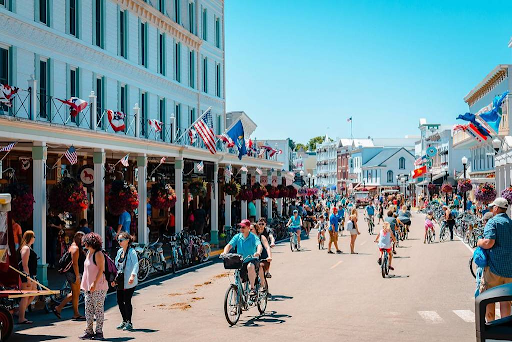
The absence of cars fosters a sense of safety, leisure, and accessibility rarely found in modern tourist destinations. Here, families can bike side by side, children can run freely, and the sounds of traffic are replaced by waves, footsteps, and the gentle clip-clop of hooves.
A Unique Selling Point for Responsible Travel
The car-free policy has evolved into a powerful and intentional tourism strategy. Mackinac Island attracts eco-conscious travelers, history buffs, and those seeking slower, more immersive experiences. Without the distraction and disruption of cars, visitors feel like they’ve entered a time capsule, walking streets lined with Victorian architecture, engaging with local businesses, and traveling as people did more than a century ago.
Horse-drawn carriage tours, bicycle rentals, and annual traditions like the Lilac Festival Parade, complete with floral-covered carriages, have become signature attractions. These activities aren’t just novelties; they embody a different pace of life that many travelers find refreshing and restorative.
Sustainability Without Sacrifice
Mackinac Island’s car ban has a significant environmental impact. The lack of vehicle emissions helps protect air quality and maintain a tranquil soundscape. Without constant traffic, noise pollution is nearly non-existent, enhancing the serenity of the destination for both visitors and residents.
Importantly, this approach supports sustainability without sacrifice. Visitors still enjoy modern comforts such as high-quality lodging, dining, and amenities, they don’t need to rely on car-based infrastructure. The car-free environment encourages walking and cycling, making active transportation the norm rather than the exception.
Preserving Heritage While Powering the Economy
The ban on cars does more than preserve the natural landscape. It also protects Mackinac Island’s cultural and architectural heritage. Historic buildings, streets, and public spaces remain largely unaltered by modern roadways and vehicle wear-and-tear. The absence of car infrastructure also reduces the need for large parking areas and wide streets, preserving green space and the island’s compact, walkable charm.
Economically, the ban creates opportunities for local businesses that thrive in a car-free setting: bicycle rental shops, horse-drawn carriage companies, and boutique hotels. These businesses rely on the uniqueness of the island’s transportation model to attract and serve tourists. The result is a vibrant visitor economy that’s built around low-impact, high-value experiences.
A Model for Sustainable Destination Management
Mackinac Island shows that bold policies when aligned with a community’s values and strengths, can create lasting tourism success. The car ban isn’t just a quirky historical fact; it’s a conscious, community-supported strategy that protects the island’s future.
For DMOs and tourism planners, Mackinac Island is a case study in how restrictions can support responsible travel, strengthen the local economy, and elevate a destination’s brand.
In a world where overtourism and carbon emissions are growing concerns, Mackinac Island offers a simple but powerful reminder: less can be more.
