

15 Oct Placemaking for Purpose

What if every public space in your destination could guide visitors to slow down, connect with local culture, and leave a positive impact? Placemaking makes it possible.
As more travelers seek experiences that feel authentic, locally rooted, sustainable, and respectful, DMOs must evolve beyond brochures and campaigns. One of the most powerful ways to shape visitor behavior and deepen local connection is through placemaking: the intentional integration of design, programming, storytelling, and partnerships to infuse public spaces with meaning, identity, and stewardship.
Below is a how-to guide for DMOs to begin acting as place stewards, using design and public space interventions to guide more responsible travel.
- Start with a vision rooted in purpose, then pilot small
Before investing in big infrastructure, begin with a shared vision: what kind of traveler-resident interactions do you want in your public realm? What stories, values, or behaviors do you hope visitors carry away? This vision becomes your design north star.
In Cayuga County, New York, Visit Cayuga, the county tourism office intentionally reframed its role to integrate diversity, equity, and inclusion into destination storytelling and public presence (including heritage sites).
Rather than immediately building new monuments, they started with organizing public programming, interpretive signage, and partnerships with cultural organizations, essentially testing community resonance before scaling.
- Design for gathering + activation to anchor slow, meaningful engagement
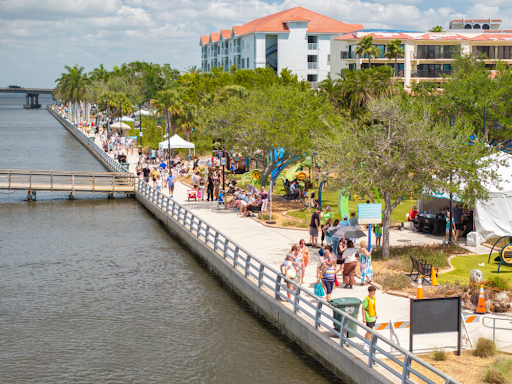
To move visitors beyond “see-and-go,” DMOs can help design spaces that invite people to dwell, explore, and participate. Realize Bradenton, Florida is a strong example. Their Riverwalk project transformed a stretch of riverfront into a multi-use public green space with features like a kayak launch, amphitheater, skate park, splash pad, playgrounds, interactive public art, and shaded lounging areas.
Realize Bradenton didn’t just build infrastructure; they overlay it with a full calendar of free, public programming (concerts, festivals, markets) that activate the space seasonally.
By designing spaces that support pause, play, nature, art, and community rituals, DMOs can reduce overtourism pressure on iconic sites and invite travelers to explore local rhythms.
Tips for DMOs
- Co-create a shared vision: Bring together local residents, business owners, cultural organizations, and city planners to define what kind of experiences and values your public spaces should promote.
- Activate spaces with community-led programming: Partner with local artists, musicians, and nonprofits to organize recurring events that celebrate local culture and foster community participation.
- Embed storytelling into design: Incorporate local history, cultural narratives, and environmental interpretation into physical elements such as plaques, public art, and wayfinding.
- Measure and adapt: Track how visitors use redesigned spaces and gather community feedback to continuously improve both design and programming.
Placemaking allows DMOs to evolve from marketers to true stewards of place, shaping how visitors experience, respect, and connect with destinations. By designing and activating spaces with purpose and local collaboration, DMOs can cultivate travel that leaves communities stronger and travelers more mindful.
